Playa Tortuga is the main landing beach on Culebrita, the uninhabited mile-long cay just east of Culebra, inside the Culebra National Wildlife Refuge. The name is not a marketing invention: green sea turtles nest on this sand and graze the reef just off it, and they were doing both long before anyone thought to sell a tour here.
We bring guests to this beach on our Culebra day trip, so you are reading the operator's version. We have tried to keep it the same version we would give you at the dock, including the parts that make some people pick a different beach.
The short version: Playa Tortuga is a green sea turtle nesting beach with a shallow feeding reef that starts right off the sand. The water is calm, clear and beginner-friendly, and of everything we run, this stop carries the best turtle odds, though nobody can promise a wild animal. There is nothing on the island: no shops, no restrooms, no fresh water, no shade structures. You arrive by boat or not at all, and whatever you pack in comes back out with you.
Why the turtles are here
Turtles do not care about beach rankings. They care about two things Playa Tortuga has in unusual supply: undisturbed sand to nest in and food in shallow water just offshore.
The sand first. Culebrita sits inside the Culebra National Wildlife Refuge, no road reaches it, and the only structure on the island is a Spanish lighthouse finished in 1886. That means the beach is dark, quiet and empty at night, which is what a nesting green sea turtle needs and what almost no developed beach in the Caribbean can still offer. The crowd on any given day is whoever fit on a handful of small boats.
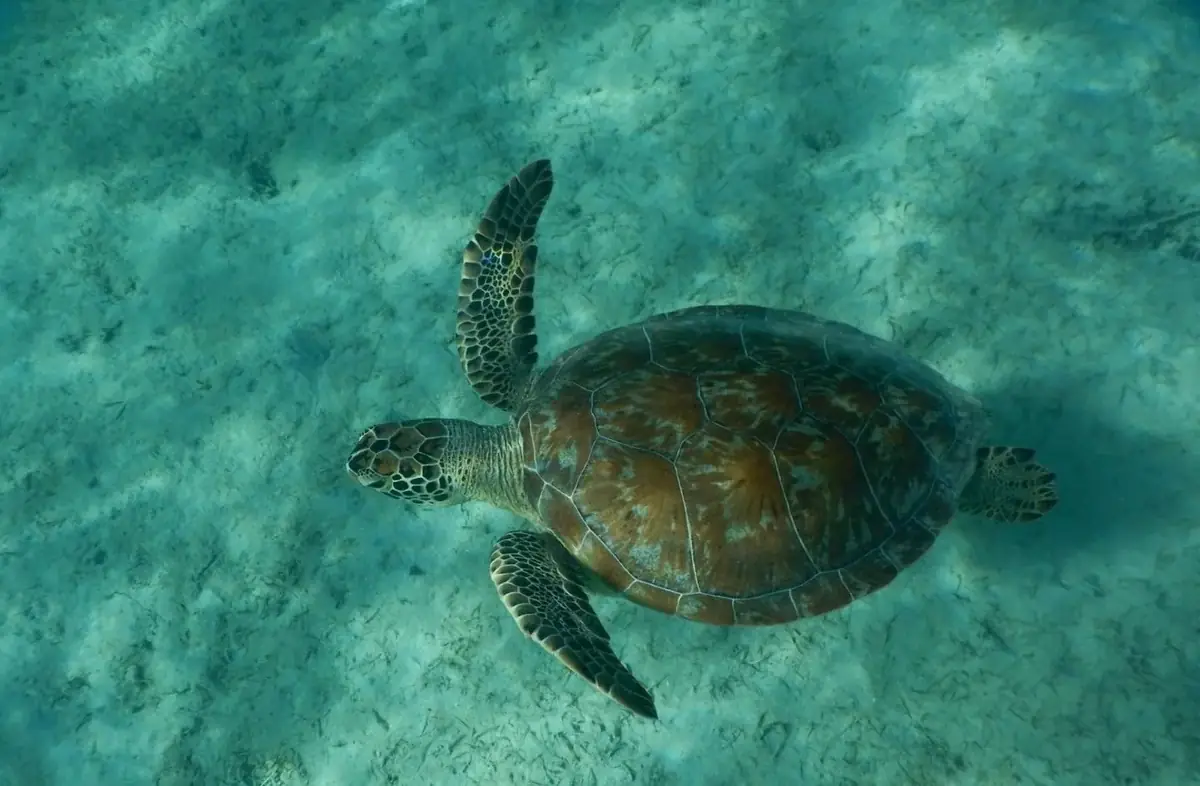
Then the food. Green sea turtles are grazers; they spend long stretches feeding in calm, shallow water, which happens to be exactly the water a snorkeler wants too. At Playa Tortuga the feeding grounds begin a few fin kicks from the sand, and because nothing drains into this water and no road traffic churns it up, it runs clearer than famous beaches like Flamenco across the channel. Hawksbill turtles also work the healthier reef edges around Culebra's cays, picking at sponges, so a second species is a realistic sighting here.
Put the two together and you get a beach where turtles are present consistently enough to have named the place. Not on a schedule, and not on demand, but consistently.
What is the snorkeling at Playa Tortuga like?
Easy, shallow and honest. You wade in from the beach, put your face down, and the reef begins. There is no long surface swim to reach anything, which is rarer than it sounds and is most of why we rate this water so highly for mixed groups.
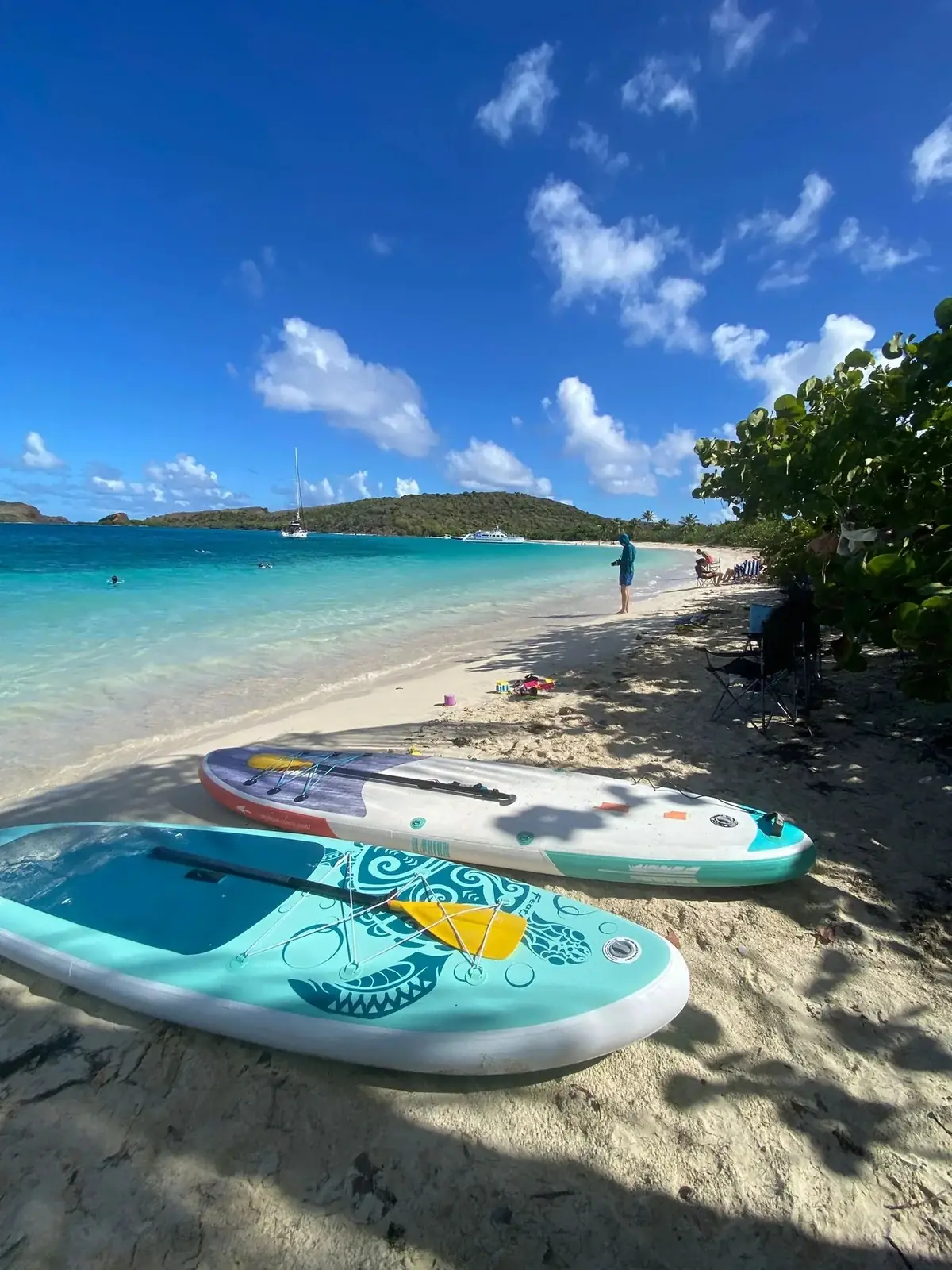
The layout suits two kinds of snorkeler at once. First-timers can work the calm, shallow water close to the sand, where it is easy to stand up, reset the mask, and go again. Confident snorkelers push out to the deeper edge of the reef, which is where the grazing turtles and the bigger structure tend to be. On our day trip a paddle board rides along for anyone who would rather float above the reef than swim it, and snorkel gear is included for every guest.
Is it good for kids and nervous swimmers?
Yes, with the usual caveat that this is open ocean, not a pool. The refuge position keeps the water calm on most days, the reef is close, and the sand gives everyone an easy exit. Mornings are typically the calmest, clearest window, which is one reason our trips put Culebrita first in the day, while the light is soft and before any breeze builds.
What else is there besides the reef?
Past the east end of the beach sit the natural tide pools locals call the Jacuzzis, where the swell pushes warm seawater in and out around you. They sit across rocky ground, so closed shoes earn their keep, and like the rest of the island there is no shade on the way. The rest of Culebrita holds five more beaches and the lighthouse trail; that is the island's story rather than this beach's, and we cover it separately in our Culebrita island guide.
Will you actually see a turtle?
Here is the honest math. Sightings at Playa Tortuga happen on nearly every visit, and of every trip we run, the Playa Tortuga stop on our Culebra day trip carries the best turtle odds. We say that as the people who also sell dedicated turtle water at Vieques, so it is not a line we hand out lightly.
And still: no. Nobody can guarantee you a turtle, here or anywhere, and we would gently suggest raising an eyebrow at any operator who does. These are protected wild animals in open water, surfacing, feeding and cruising on their own schedule. What moves the odds in your favor is the same short list that works everywhere: calm conditions, the right habitat, and slow, quiet snorkeling that covers less water and looks more. Playa Tortuga supplies the first two better than almost any beach in Puerto Rico. The third one is on you.
If the turtles are the whole point of your trip, read our full guide to snorkeling with sea turtles in Puerto Rico, which ranks every realistic spot on the island and explains the behavior that earns longer encounters.
Want to snorkel Playa Tortuga? Our Culebra day trip lands you on this beach for the heart of the day, ferry tickets and snorkel gear handled, from $160.
Getting there: boat or nothing
There is no way to walk, drive or ferry directly to Playa Tortuga. Culebrita has no road, no ferry stop and no dock; small boats land on the beach and that is the entire transportation system.
In practice there are two routes. Travelers already staying on Culebra can arrange a boat shuttle from the island out to Culebrita and back. Everyone else does it as a guided day: our Culebra day trip chains the pieces together, with the hard-to-get Culebra ferry tickets secured in advance, ground transport waiting at the dock, a market stop for food and water, and the small boat to Culebrita, where the group gets about five hours on the island with Playa Tortuga as the anchor stop before a late-afternoon visit to Flamenco Beach.
The full logistics of the island, the ferry math, the lighthouse trail, the other beaches, belong to our Culebrita island guide, so we will not repeat them here. The thing to take from this section is simpler: whichever route you choose, the boat is the only door, and that is exactly why the beach still looks the way it does.
Rules and respect: it is their beach
Playa Tortuga sits inside a national wildlife refuge, and the beach is a working nesting site, not a backdrop. The rules are short, and they are the whole reason the place is still worth the boat ride:
- Pack in, pack out. There are no bins, no restrooms and no vendors on Culebrita. Everything you bring, including food scraps, leaves with you.
- Take nothing. No shells, no coral, no souvenirs from the sand or the water.
- Never touch, chase or ride a turtle. They are protected by federal and local law, and harassment burns energy they need to feed and breathe.
- Give them room and a clear lane up. Keep several body lengths of distance and never position yourself between a turtle and the surface; they breathe air, and if one starts rising, ease sideways.
- Stay horizontal and fin gently. Splashing and vertical treading read as threat. Calm snorkelers get the longest encounters; the turtle decides how close it gets.
- Fins on sand only. Do not stand on the reef or the grass the turtles feed on.
- Reef-safe sunscreen or a rash guard. What washes off you ends up in the water the turtles eat from.
- Leave the drone at home. Launching or landing drones in the refuge is prohibited.
None of this is difficult, and the full etiquette, with the reasons behind each rule, is in our sea turtle snorkeling guide. The summary is the thing to remember: you are a guest at the one beach on this coast the turtles never stopped using. Behave like one and they tend to stay.