Most people hear about Culebrita the same way: they research Culebra, find Flamenco Beach on every world-best list, and then notice that locals keep mentioning a smaller island past it, the one with the lighthouse and no people. Then they try to figure out how to get there and the internet goes quiet, because there is no ferry schedule to screenshot and no parking lot to drop a pin on.
We take guests to Culebrita regularly, so this is the explanation we give at the dock, with the inconvenient parts left in.
The short version: Culebrita is an uninhabited island off the east end of Culebra, inside the Culebra National Wildlife Refuge. No ferry goes there and there is no dock; you reach it by small boat from Culebra, either a local shuttle you arrange yourself or a guided day trip. On the island: a ruined 1886 lighthouse you can hike to but not enter, natural tide pools called the Jacuzzis, several empty beaches, and zero facilities. No shade, no water, no bathrooms. Pack in, pack out, start early.
What is Culebrita?
Culebrita is a coral islet about a mile long sitting off the east end of Culebra, which itself sits between the Puerto Rico mainland and St. Thomas. It is the easternmost point of Puerto Rico, it has never been developed, and it is protected as part of the Culebra National Wildlife Refuge. No road reaches it, nobody lives on it, and the only structure on the whole island is the stone lighthouse on the hill.
What the island has instead of infrastructure is geography: a string of beaches around its edges, a sheltered bay on the north side, rocky points where the open Caribbean piles into tide pools, and a hilltop view that reaches the U.S. Virgin Islands. On a weekday you can share all of it with whoever fit on a handful of small boats, which some days is almost nobody.
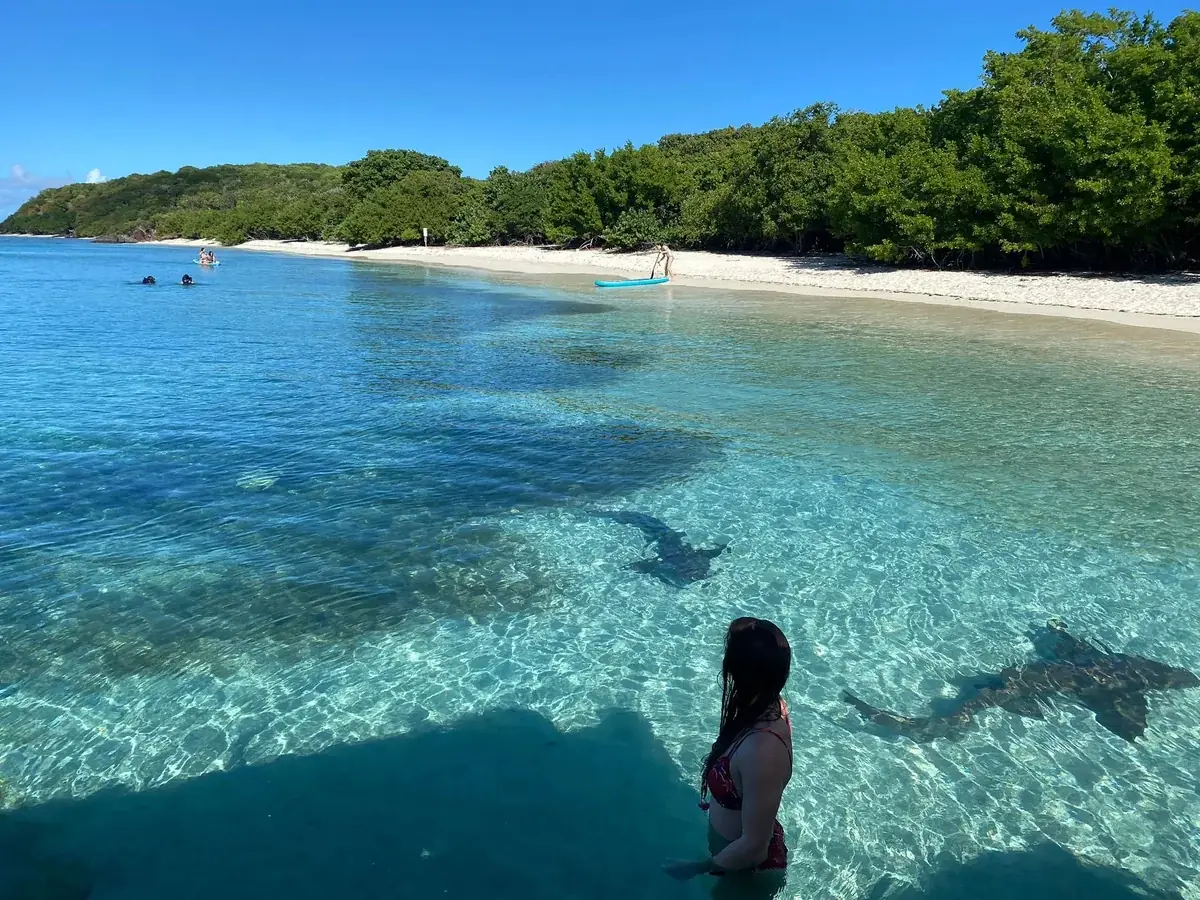
Because it is a refuge island, the emptiness is permanent by design. That cuts both ways, and this guide will keep returning to the second half: everything you want on Culebrita has to cross the water with you, and everything, including trash, has to leave with you.
How do you get to Culebrita?
Start with the fact that trips over: there is no ferry to Culebrita. The public ferry from Ceiba runs to Culebra, the inhabited island next door, and that is where it stops. Culebrita has no dock at all; boats anchor or nose up to the beach and you wade ashore. So every visit is really a two-leg trip: get to Culebra first, then cross the last stretch by small boat. There are two realistic ways to put that together.
Option 1: Do it yourself via Culebra
Take the ferry from Ceiba to Culebra (75 to 90 minutes of open water), or fly to Culebra's small airport, then arrange a boat shuttle or water taxi on the island to run you to Culebrita and pick you up at an agreed time. Local operators do this from the Culebra side; availability and prices vary, so confirm before you build a day around it.
The honest caveats are real. Culebra ferry tickets are hard to come by for visitors: residents board first and the remaining seats sell out days ahead, which is where most do-it-yourself plans die. Once on Culebra you still need the shuttle, your own supplies from a market, and a firm pickup arrangement, because once the boat leaves, you are on an uninhabited island with no phone-a-vendor option. If seas come up in the afternoon, you wait for your boat like everyone else.
Option 2: A guided day trip
The second option is the one we run, so weigh our bias: a packaged day where the ferry tickets are bought in advance, ground transport is waiting at the Culebra dock, a market stop covers your food and water, and the small boat, snorkel gear, chairs and umbrella are all handled. Our Culebra day trip runs it this way, with about five hours on Culebrita plus a Flamenco Beach stop before the return ferry, from $160 per person.
What the package really buys is the two failure points: the ferry tickets you probably cannot get, and the boat that is guaranteed to be there. It is a long day, and we tell people that plainly; from San Juan it can run 15 to 17 hours door to door on the early departure. The guests who love it most are the ones who knew that going in and wanted two islands at full depth instead of a glance at one. If you would rather skip the ferry entirely and make a boat the day itself, that is a different trip: the Culebra boat snorkeling tour from Fajardo.
Want Culebrita without the logistics? Ferry tickets, the boat shuttle and the whole day handled, from $160.
Can you visit the Culebrita lighthouse?
You can hike to it; you cannot go inside it. The lighthouse on Culebrita's hill was finished by the Spanish in 1886, stayed in service until 1975, and was added to the National Register of Historic Places in 1981. The structure has been deteriorating for decades and entry is not allowed, so manage expectations: this is a ruin with a view, not a museum.
The view is the point. From the hill you look back across the anchorage and Culebra, and on a clear day the horizon reaches St. Thomas and Cayo Norte. It is the kind of panorama that explains why the Spanish put a light here in the first place: this hilltop watches the whole passage between Puerto Rico and the Virgin Islands.
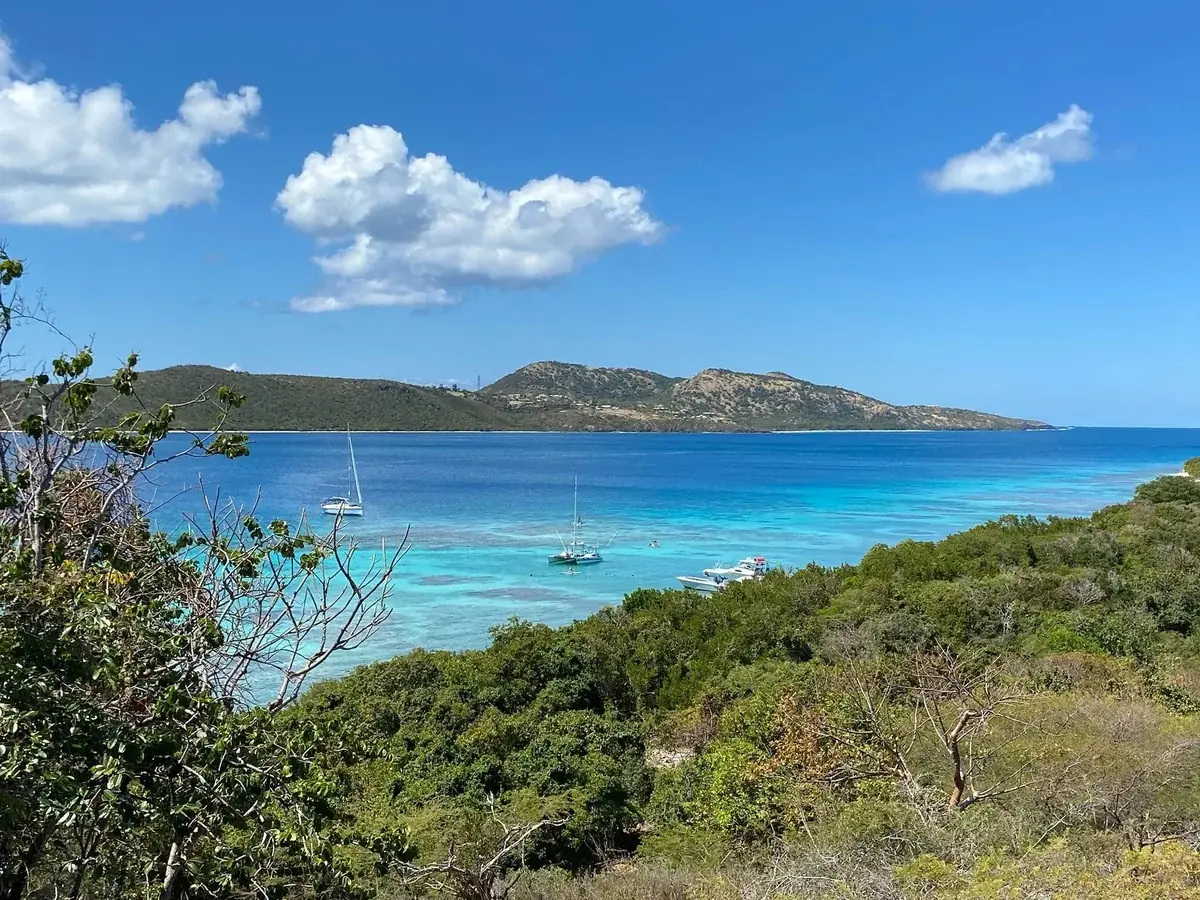
About the trail itself: it is short but hot, uphill, rocky in stretches and completely without shade. Closed shoes, sneakers or secure water shoes, are genuinely required, not a suggestion, and the smart move is to hike it earlier in the day before the sun is overhead, with water in hand. Flip-flops on that trail is the single most common mistake we watch people make on this island.
The Jacuzzis: Culebrita's natural tide pools
Past the east end of the big north beach, the island's rocky point traps a cluster of natural tide pools that locals call the Jacuzzis, and for once the nickname undersells nothing. The swell pushes warm seawater in and out of the pools around you, a slow surge and drain, like a spa built by the ocean. On a calm day you can sit in them for an hour and watch the Caribbean refill your tub.
Two practical notes, because the Jacuzzis punish casual footwear. The approach is across rocky ground, so closed shoes are required to get there comfortably and safely, and like the rest of Culebrita there is no shade on the way or at the pools themselves. Go early or go sun-protected. And read the day: when the swell is heavy, the same surge that makes the pools fun makes the rocks around them a bad place to stand, so if the ocean looks angry, enjoy the beach instead. Your captain or guide will tell you straight.
The beaches of Culebrita
For an island a mile long, Culebrita is absurdly rich in sand: half a dozen beaches ring the island, and because visitors arrive only by small boat, even the busiest of them is quiet by mainland standards. The sheltered north bay holds the long, calm showpiece beach where most boats land; smaller coves on the west and south sides are often literally empty. Water clarity is a step above what most people have seen on the mainland, because nothing drains into it and no crowd churns it up.
The famous one is Playa Tortuga, the big north-bay beach named centuries ago for the green sea turtles that nest on its sand and feed over the reef just offshore. It deserves its own write-up, and it has one: our Playa Tortuga guide covers the turtles, the snorkeling and how the beach behaves day to day.
If you are weighing Culebrita against Flamenco Beach, the short answer is that they are different products: Flamenco is the famous, serviced crescent on Culebra itself, kiosks and crowds included, while Culebrita is what Flamenco was before the world found it. We compared them, and everywhere else we snorkel, in our guide to the best snorkeling in Puerto Rico.
Practical rules for a refuge island
Culebrita is federal refuge land, and the island only stays the way this page describes it if visitors hold up their end. The rules are short and non-negotiable:
- Take nothing. No shells, no coral, no souvenirs from the beach or the water.
- Leave nothing. There are no trash bins. Every wrapper and food scrap goes back on the boat with you.
- No drones. Launching or landing drones in the Culebra National Wildlife Refuge is prohibited.
- Give wildlife room. Turtles, rays and nesting birds get space; watch, do not chase, corner or feed.
- Stay off the coral. Fins and feet on sand only, and keep sunscreen reef-safe, applied before you get in the water.
And the packing logic follows from one fact: there is nothing on the island. No fresh water, no food, no restrooms, no shade structures. Buy water and food on Culebra before the crossing, more water than you think, bring sun protection you can trust for hours of exposure, closed shoes for the lighthouse trail and the Jacuzzis, a dry bag for the phone, and a trash bag for the way out. Start early: the light is softer, the water is calmer, and the shadeless parts of the island are far friendlier before noon.