
The short answer: the best snorkeling in Fajardo is offshore, on the cays of the La Cordillera Reef Nature Reserve. You reach them by boat, and Cayo Icacos, the most visited, is roughly 20 to 30 minutes out, with calm, shallow reef and a long white sandbar that make it easy for beginners. If you would rather walk in from the beach, Seven Seas in Las Croabas is the shore option on calm days.
Quick plan
- Best spots
- La Cordillera cays, by boat
- Shore option
- Seven Seas Beach, Las Croabas
- Boat time
- About 20 to 30 min to Icacos
- Best season
- All year; April to June often calmest
- Easiest trip
- Icacos Snorkel, $109 all-inclusive
Fajardo snorkel spots: shore vs boat
Almost every snorkel spot in Fajardo is a boat trip. The reserve's cays sit offshore with no bridge or public ferry, so a captain takes you out and picks the calm side for the day. Seven Seas Beach is the one easy shore entry, and a coastal walk from it leads to a quieter cove. Use the table to match each spot to your group, then choose the way in that suits you.
| Spot | How you get in | Boat time | Who it suits | Good to know |
|---|---|---|---|---|
| Cayo Icacos | Boat only | About 20 to 30 min | First-timers, families, beach lovers | Largest uninhabited cay in the chain, long sandbar, no facilities |
| Cayo Ratones | Boat only | Varies by route | Part of the Icacos stretch | Small cay near Icacos, inside the reserve |
| Cayo Diablo | Boat, calm days | Varies by route | Confident swimmers on flat days | Shallow reef; crews go when the north swell is down |
| Cayo Lobos | Seen from the boat | Varies by route | Sightseeing along the way | Privately owned, so plan your beach time elsewhere |
| Isla Palomino and Palominito | Boat, or the resort's own service | Varies by route | Resort guests, private charters | Palomino is privately owned; Palominito is a tiny cay nearly washed away by erosion |
| Seven Seas Beach | Shore, walk in from the sand | No boat needed | Beginners, kids, do-it-yourself days | Calm and shallow on calm days, modest reef, small parking and restroom fees |
| Playa Escondida (Colorá) | Shore, coastal trail from Seven Seas | No boat needed | Walkers who like a quiet cove | Reached on foot; look at the sea before you swim |
Two easy ways onto Icacos
All-inclusive snorkel
Icacos Afternoon Snorkel
$109 per person
- Two guided snorkel stops, about 4 hours
- Mask, snorkel, fins and flotation included
- Drinks and snacks on board, ages 3 and up
Slow beach day
Icacos Beach Day
$89 per person
- Small boat out, about 20 to 30 minutes
- About 5 hours on the island, umbrella set up
- Add the Guided Hike for $20: guide, mask and snorkel
Free cancellation up to 24 hours before, so you can book now and plan the rest later.
The La Cordillera cays
La Cordillera Reef Nature Reserve is the protected chain of cays and reefs running east from Fajardo, designated in 1980 and managed by the DRNA, Puerto Rico's natural resources department, since 1991. It covers about 29,653 acres, from Cucarachas and Farallones through Icacos, Ratones, Lobos, Palominos, Palominitos and Diablo to the Hermanos and Barriles reefs. That protection is why La Cordillera reef snorkeling feels so alive.
Under the surface you swim over brain corals, finger corals and branching Acropora. More than 80 fish species have been recorded in the reserve, green turtles live here, and humpback whales pass through in winter, roughly December to February (reserve overview).

Cayo Icacos
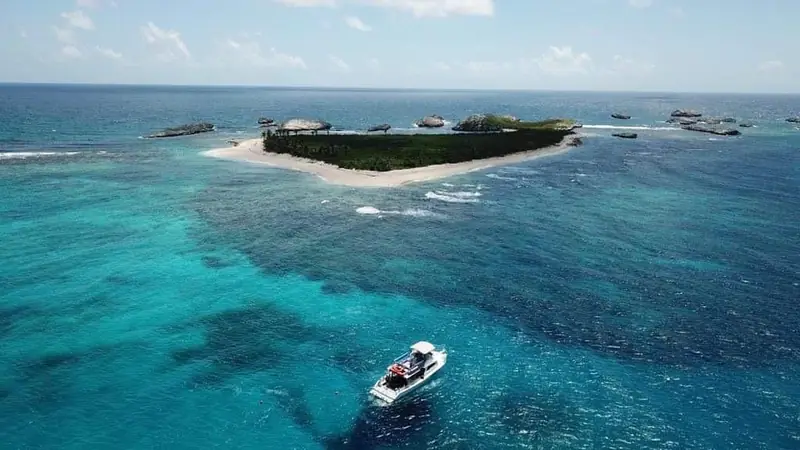
Icacos is the largest uninhabited cay in the chain, about 163 acres of white sand and low green scrub, and the one most boats visit (Icacos Cay). It is boat only and has no facilities, which keeps it beautifully simple: reef on the sheltered side, a sandbar for the non-snorkelers, and nothing to do but enjoy the water. Our full Icacos Island guide covers the cay in depth.
Cayo Ratones
Ratones is a small cay near Icacos and part of the same protected chain. You will often see it on the ride out as the reserve's islets line up along the horizon.
Cayo Diablo
Diablo is a shallow reef site for calm weather. It sits more exposed to the north, so crews head there on flat days and choose a sheltered cay when a north swell is running (dive site notes). Think of it as a bonus spot the sea decides on.
Cayo Lobos
Lobos is privately owned, so plan your beach time elsewhere and enjoy its outline from the water as you cruise the chain.
Isla Palomino and Palominito
Palomino is privately owned, with most of it leased to the El Conquistador resort, and is reached by the resort's own service or by boat (Isla Palomino). Just south sits Palominito, a tiny cay that erosion has nearly washed away. Both make a pretty sight on a private boat route.
Shore snorkeling in Fajardo: Seven Seas and beyond
Seven Seas Beach (Balneario Seven Seas) in Las Croabas is the easy shore snorkel in Fajardo. You walk in from the sand to calm, shallow water on calm days, with a modest reef that suits beginners and kids. Winter can bring surf, so look at the sea first and enjoy the beach either way. Parking and restrooms are on site for small fees (beach details).
Next to the beach entrance, Las Croabas is a fishing village and a launch point for boats to the cays. For a quieter cove, a walk along the coast trail from Seven Seas leads to Playa Escondida, also called Colorá.
A shore day suits you if
- You have your own mask and like a do-it-yourself pace
- Little ones want shallow water close to the sand
- The sea is flat and you are on the coast already
A boat day suits you if
- You want the clearest reef and the cays' white sand
- You like gear, guides and flotation handled for you
- You want the crew to read the sea and pick the calm side
Reading the sea: winter swells, summer calm
Fajardo snorkeling runs all year, and the sea changes with the season. From late fall into spring, north swells roll in from the Atlantic, so crews favor the sheltered sides of the cays and save exposed spots like Cayo Diablo for flat days. Spring and summer usually bring smoother water and the widest choice of reefs, with April to June often the calmest stretch.
Winter has its own reward: humpback whales pass through the reserve waters from about December to February. Trade winds often build through the day, and on any trip the crew picks the anchorage for that day's conditions, which keeps you free to simply enjoy it. Our month-by-month guide to the best time to snorkel has the full calendar.
Going further: Culebra and Vieques from the east coast
Fajardo boats also run full-day snorkel trips to Culebra and Vieques, the two islands farther east, and the Culebra Day Trip rides the ferry from nearby Ceiba. Days there trade the short Icacos hop for a longer crossing, white-sand beaches and sea turtle territory. If you have one big day for the water, these are the trips to look at, and our island-wide ranking of the best snorkeling in Puerto Rico shows how they compare.
Private boat around the cays
A private boat lets your group build its own route through the Fajardo cays: snorkel the calm side of Icacos, cruise past Lobos and Palomino, and stay as long as the day feels right. Choose a center console, a yacht or a catamaran, with captain and crew, for up to 40 guests per boat. It is a lovely fit for families, celebrations and anyone who likes their own schedule.
See the private boat and yacht charters, the private catamaran charter for up to 12, or read how to choose a private boat in Fajardo.